
Who's behind the news?
Who's behind the news?
Reporter Aaron Hemens and publisher Eden Fineday discuss community accountability, Indigenous approaches to journalism, and the precarious economics of running a small newsroom
IndigiNews approaches local journalism as a relationship rather than a transaction. Its reporters spend years building trust in the Indigenous communities they cover, while its leadership has created a newsroom culture that treats staff well-being and cultural safety as essential to producing responsible journalism.
That model does not make the financial pressures facing a small newsroom disappear. Much of IndigiNews’s reporting is supported by Canada’s Local Journalism Initiative, supplemented by philanthropy and approximately 600 recurring donors. Even with its recent designation as a registered charity, however, dependable, unrestricted funding remains elusive.
Newsjunkie managing editor Peter Landau spoke with reporter and photographer Aaron Hemens about community-led reporting, accountability, and the responsibilities of covering Indigenous communities as a non-Indigenous journalist. He also corresponded with IndigiNews publisher Eden Fineday about funding, editorial independence, employee care, and her vision for a global network of Indigenous journalists.

Tell me a little about where you began, where you grew up, and how you found your way into journalism and photography.
I grew up in Ottawa, Ontario. I attended Carleton University and completed its bachelor of journalism program between 2014 and 2018.
Originally, I wasn’t really interested in becoming a journalist. After high school, I wanted to be a filmmaker. I liked using cameras and making pictures, and I liked writing, too. I used to write screenplays with my buddies in high school.
I stumbled upon journalism by accident. In my first year of university, I was studying film and taking electives, including several human rights courses. I began learning about the history of Indigenous peoples throughout the Americas.
I should disclose that I’m not Indigenous. I’m mixed Filipino, and I grew up in Canada without really learning about colonization or the history of colonialism here. Those courses opened up a whole new world to me. I followed that curiosity throughout my studies and eventually came across journalism.
I was also reading Fear and Loathing in Las Vegas by Hunter S. Thompson. I think that’s how a lot of journalists become interested in the field, right? It piqued my interest because I thought, “This seems like a fun career. You get to go around Vegas and write about your crazy experiences.”
That was almost 10 years ago. Ten years later, it’s not quite like that. But I combined my interests and got into journalism.
I switched programs and became serious about wanting to be a journalist as I learned more about Indigenous issues in Canada. I wanted to see how I could be a catalyst for the change I wanted to see in the world. Journalism became an outlet for advocacy and for addressing some of the wrongs I observed involving Indigenous communities in Canada.
You’re not Indigenous, but you cover Indigenous people. How does that distinction shape the way you approach your sources, stories, and responsibilities as a journalist?
I grew up with the traditional journalism model: You don’t become friends with your sources. You don’t eat with your sources. You don’t hang out with them afterward. There are certain relationships you’re not supposed to have.
But when I started working with IndigiNews, I realized that you can’t do this kind of work without developing relationships.
A big part of my job is building relationships. It’s not just reporting. The bulk of my work has involved meeting people in the community, introducing myself, sharing my intentions, explaining what I’m doing and building a sense of trust.
That has meant accepting food from sources and having lunch with them. I’ve been taught by members of the Indigenous community here that it can be disrespectful not to accept gifts or invitations, especially from Elders.
These are things I do now that I wasn’t taught in school. They blur the lines between being a journalist and being a community member, but I can’t do the work without building those relationships.
I’ve spent years developing relationships with Syilx people in the Okanagan. That has given me access to sensitive events and information I wouldn’t have received if I hadn’t put in the work.
Would you describe yourself as embedded in the community?
Yeah. I’ve been here for four years, and the first couple of years were spent building relationships. That took a lot of time, but it has contributed greatly to the success of my work. It has given me access to opportunities I wouldn’t have had otherwise.
Could you talk about the creation of IndigiNews, how it compares with existing Canadian media and what it was intended to address?
If I remember correctly, IndigiNews was founded around the beginning of the COVID-19 pandemic, in 2020.
There is an independent media company called The Discourse. Its editors, who are non-Indigenous, wanted to train Indigenous storytellers and strong writers who aspired to become journalists. They started IndigiNews and recruited writers from Indigenous communities throughout British Columbia.
It began in B.C. about six years ago with a very small group. Non-Indigenous editors trained Indigenous writers to become journalists, and the organization still has only a handful of people.
The people who started it are no longer directly involved, although they continue to support it from the sidelines. We began as a sister organization to The Discourse, but over the past two years, our publisher, Eden Fineday, has steered us toward becoming a completely independent organization and registered charity.
Our board and leadership are entirely Indigenous. The organization is led by Indigenous women, which isn’t a model you often see in Canadian newsrooms.
I started working in journalism in 2019 and have worked in several newsrooms, from Black Press to news services. None of them were like the Indigenous newsrooms where I’ve worked. Eden and my editor, Cara McKenna, bring many of their cultural teachings into the workplace.
A lot of those teachings involve respect for oneself, mental health and respect for the community. Our health and well-being are really championed in the newsroom. That isn’t something I experienced in my previous positions.
I really appreciate Eden and Cara bringing Indigenous values into the workplace. They have created a safe space for young journalists, especially Indigenous journalists, to learn and grow without feeling the pressures that can come from working in a newsroom that isn’t particularly diverse.
It’s a culturally safe space where people can learn, make mistakes and feel cared for. There is a great sense of kinship. It supports my work because I feel more at ease, more confident and better supported.
We’re exploring whether community-based news organizations can offer a sustainable model for local journalism. IndigiNews has a distinctive approach. What does community-led journalism look like in practice? How do community members influence which stories are pursued and how they are told?
I spend a lot of time building relationships. Community members give me inside information about what is happening, whether it involves conservation, salmon restoration, wetlands or river restoration. I receive that information because I’ve built relationships with them.
That really guides my work. I’ve also developed relationships with Elders who give me insight into what I should investigate. A lot of it involves extractive-industry projects throughout the Okanagan, which is a territory facing many water-related issues.
The community helps direct me toward what its members perceive as the biggest issues. Those priorities are reflected back to me through the people I’ve met and the relationships I’ve developed.
Those relationships have also given me access to spaces that most media outlets in the Okanagan don’t enter. It’s a great privilege and responsibility that I take very seriously. I’ve put a lot of work into developing trust and showing the Indigenous community that I’m serious about honoring its work. I’m not here to benefit from or exploit people’s trauma.
That’s not the work I do. I look for more positive stories that celebrate the community and its members. The way I work with the community is very holistic and almost collaborative.
Data sovereignty is also very important to the Syilx Okanagan people. I share my photographs with them afterward, and I don’t charge them. They really appreciate my work. Many of the stories I write now are simply things community members bring to my attention. I also follow social media, and people reach out to ask me to look into things.
How do you stay accountable to the people you cover rather than to advertisers, investors or a mass audience?
I’m not sure. That might be more of a question for Eden because I don’t handle the business side. I’m on the front lines of community reporting and the editorial work.
I believe we receive sponsorships from the Syilx Okanagan Nation at times. I think it has sponsored some advertisements, although I would need to fact-check that. I’m probably not the right person to speak about the business model.
How important has Canada’s Local Journalism Initiative been to maintaining reporting capacity?
It has been essential. During my four years here, my position has been funded by the Local Journalism Initiative.
Many of our positions are funded by the LJI, and the work wouldn’t be possible without it. I’m really grateful for the program and the work it supports. It literally gives me work. There are also some very good stories on the wire that we’ve picked up over the years.
I can’t underscore how important the LJI is. It champions community news and produces stories you won’t find elsewhere because it directs money to smaller media outlets.
You don’t usually get these kinds of community-based stories from major cities such as Vancouver or Toronto. It’s a great service, and I’m happy to see it continuing. Journalism is chronically underfunded, and you often hear about governments proposing cuts to journalism programs.
Does that government funding come with strings attached or pressure from the program?
At first, there was some pressure to meet a story quota. I believe the requirement was five stories a week, although it may have changed. But in my experience, the program has been pretty relaxed and has allowed us to work at our own pace.
I think the administrators understand that our work differs from that of other organizations. We spend a lot of time on our stories and don’t rush to meet deadlines. We recognize that many of these subjects carry a lot of weight. They can be traumatic and can retraumatize people, so a certain level of care has to be part of the storytelling. As a result, deadlines aren’t as significant a pressure for us.
The LJI appears to understand that. It hasn’t come down on us for failing to meet a three- or five-story weekly quota. I think its administrators recognize the quality of our work and seem to be happy with it.
IndigiNews supporters are called Fire Keepers. Could you explain that program?
That’s a fundraising campaign Eden and our operations team launched during the past couple of years. I’m not directly involved, so Eden would be better positioned to answer.
My understanding is that Fire Keepers are readers and donors whose contributions help support our staff and operations. Not all of our positions are funded through the LJI. Maybe two or three are, but not all of them. As a result, we rely on fundraising campaigns to help keep some of our operations afloat.
The Fire Keepers campaign invites readers who are able to support the organization to help keep the fire going.
You receive support from the community, report on the community and provide local news to the community. How do you maintain editorial independence in that environment?
I’ve lived in the Okanagan for about six years. As soon as I arrived, I noticed a gap in coverage of Indigenous communities, especially the Syilx Okanagan people.
You would see some stories here and there, but there was never much consistent coverage. So much was happening in the Indigenous community, but you didn’t see much reporting about it.
I feel that I’ve helped fill the gap. I’ve maintained my editorial independence while building relationships that give me access to stories you won’t see in other local media.
Interestingly, because my position is funded through the LJI, many of my stories are picked up and reprinted by local media outlets. The Penticton Herald, for example, is a big supporter of our work. That shows there is an interest in the editorial work I do, even though not many people are doing this kind of reporting here.
I’ve been doing it for four years now, and I’m still proud of the work. It’s nice to see that we have supporters.
Reporting on a community can require a significant amount of emotional labor. How does IndigiNews prevent care, cultural responsibility and availability to sources from leading to burnout? How do you handle it personally?
That’s something IndigiNews is really good at. Ever since I arrived, the organization has championed a culture of wellness.
When I first started, people warned me about the emotional effects of reporting on residential schools and missing and murdered Indigenous women. They encouraged me to take care of myself afterward—to take the day off if necessary, put the work away and decompress after attending an event.
Since I started at IndigiNews, we’ve also held a “head and heart” meeting every Tuesday. Because we all work remotely, most of the team is scattered throughout British Columbia, Vancouver, Winnipeg and elsewhere. We don’t often see one another in person.
Eden hosts the meeting, and it’s a place where we don’t really talk about work. We talk about how we’re doing, how we’re feeling, what we’re carrying in our personal lives, our successes and what’s bothering us.
Those meetings create a safe space for us to be vulnerable with one another. That’s something I haven’t experienced in any other workplace.
Every third Wednesday of the month is also a Wellness Wednesday. Eden understands that our work can be very heavy, so we’re encouraged to take the day off and care for ourselves.
She has also encouraged us to work four days a week. Why not have three-day weekends? It can be difficult for a reporter to work only four days, so sometimes I work all five. But there are Fridays when I’ve had a busy week and think, “All right, I’m just going to take the day off. It’s fine. Eden wants us to.”
A couple of weeks ago, the entire staff had a paid week off. Eden told us to take the week, enjoy the summer and have some time to ourselves.
Wellness is genuinely championed here. There are so many examples.
There have been times when I’ve had to return to Ottawa for family emergencies, and it was never a problem. I could take as much time as I needed. I went to the Philippines for the entire month of December, and Eden and Cara encouraged me to do it.
That was really powerful for me. Whenever I need a day or a week off, I can ask. Sometimes I don’t even need to explain. They understand that the work is difficult and that the world is a heavy place.
It’s a safe workplace that encourages everyone’s well-being, and that benefits my journalism. I feel more supported and cared for, and the quality of my work improves as a result.
What do you wish readers better understood about what it takes to produce a careful, community-accountable story?
A lot of care goes into the work we do. Obviously, we’re never trying to create unnecessary tension in the community. Care and consideration are always important, although we also have a responsibility to hold the community accountable when scandals or other problems arise.
We never want to frame a story in a way that puts an Indigenous community down. We try to lead with respect and honor the Nation, even when there is a problem. It can be tricky, but a lot of thought and care go into our storytelling and the angles we take.
A lot of heavy lifting happens behind the scenes to build these connections. There have been times when I’ve made mistakes in a story, but I’ve returned, acknowledged them and made amends with the community.
Mistakes happen. We’re simply trying our best to honor the community.
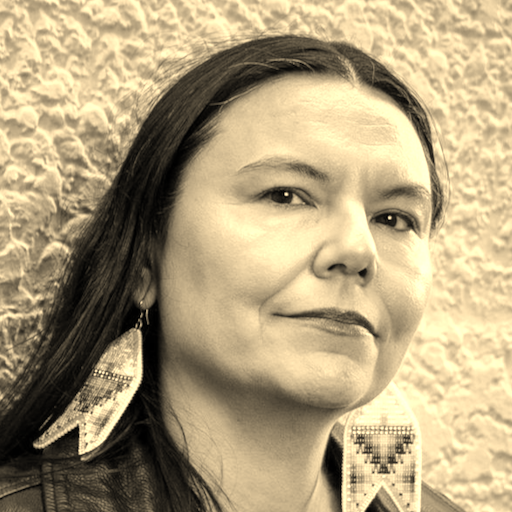
To learn more about the business of sustaining IndigiNews, Newsjunkie spoke with publisher Eden Fineday.
What has to be sustained besides revenue?
To do journalism the way we do it, our relationships with the Indigenous communities we report on and report from are paramount. Those relationships have to be sustained.
Everything else—staff health benefits, institutional knowledge and so on—comes from revenue. We currently pay $2,500 per month for our employer health plan.
A newsroom is not sustainable if its people are overworked, underpaid, traumatized or expected to sacrifice themselves for the mission.
What does IndigiNews’s current funding model look like?
Our funding comes from a mix of government grants, philanthropic support and reader revenue.
Since 2020, the Canadian federal government has operated a program that funds local journalism. Local Journalism Initiative grants cover most of our reporters’ salaries and have since day one.
On top of that, we receive grants and other large gifts from community and family foundations. We apply for a lot of funding, but most grants support specific projects, which is not sustainable for us. We don’t want to have to invent projects simply to qualify for funding.
We have approximately 600 recurring monthly donors, and we recently became a registered charity, effective January 1, 2026. We hope that status creates greater potential for individual donations, major gifts and foundation support.
We became a charity because I don’t see a business model for journalism. But all of our funding is precarious. We’re always looking for dependable, multiyear, unrestricted support.
How can a small newsroom diversify its revenue without overwhelming its reporters?
I feel that my job is to protect our reporters from funding stress, but that isn’t always possible. We lost funding for our longest-running beat this year, and now we’re preparing to launch a major campaign to fund it.
We sometimes refer to IndigiNews as a Storytelling Lodge—a sacred place, like the ceremonial lodges found in some of our cultures. I always picture myself outside that lodge, with my arms around it, fending off the world so the reporters and editors can do their important work.
How does IndigiNews protect its editorial independence?
We do it the way most newsrooms do. It might seem that asking people for money makes us more vulnerable to influence, but that isn’t the case.
Funders have no influence over our stories. They don’t assign stories, approve stories, select sources or review journalism before publication.
Cara McKenna, our editor, has complete control over what we publish. Even I can’t publish something without her approval. Cara’s standards are high. She’s an exceptional journalist, and I believe our stories are as respected as they are because of her.
Do funders lose interest after helping launch a newsroom?
I think there is a lot of enthusiasm for new things. As the journalism industry was cratering, some larger players, including Google and major philanthropic foundations such as Knight, began funding journalism.
Five years ago, there were many “news accelerator” programs funding the launch of small newsrooms and celebrating new solopreneurs. I feel that sheen has now worn off.
We’ve been lucky to receive multiyear grants from several foundations, and we have deeply loyal readers who have been with us from the beginning. But even those grants will run out within the next few years, and I don’t know what we’ll do without them.
What forms of revenue are especially difficult to pursue without compromising the mission?
We don’t do branded content or sponsored journalism.
Sometimes a foundation will support stories about water or land, but that encompasses a large portion of our reporting, so we don’t consider it a compromise. We sometimes include a disclaimer at the bottom of a story saying, “This story was made possible in part by …”
Are advertising and sponsorship meaningful possibilities?
We offer newsletter sponsorships, which consist of an advertising block in one of our newsletters. It’s usually just a few words and a logo—nothing too overpowering.
We don’t want advertisements on our website, and our news is always free to read.
What did IndigiNews’s early partnerships make possible?
The Discourse provided an organizational home, administrative systems and experienced leadership during our earliest stage.
Erin Millar, the founder of The Discourse and chair of its board, introduced me to most of IndigiNews’s major funders. I’m very grateful for that.
We were also connected with the Aboriginal Peoples Television Network, or APTN, at the beginning. That gave some of our work greater reach and helped establish our credibility with audiences across the country.
What would a healthy network of independent Indigenous and community newsrooms look like?
I think it would be really cool if tâpwêwin media could become a home for Indigenous newsrooms across the country. I want our charitable status to help other Indigenous storytelling organizations.
I also dream of an Indigenous wire service—a network of Indigenous journalists around the globe. That would be amazing.
How can an organization grow without becoming less local or accountable?
When I think about IndigiNews growing, it is naturally tied to having more reporters embedded in more communities.
I think about increasing readership, of course, but readers come from reporting that feels relevant to them. We have expanded into more national reporting, which we didn’t do at the beginning. I suppose that is a kind of growth that makes us less local.
But most of our coverage remains local, and our strongest readership is in places where reporters have spent years building relationships and trust.
The most meaningful way for IndigiNews to grow is by deepening and expanding its community-based reporting. That approach would increase our reach while allowing us to remain accountable to the communities we serve.
Newsjunkie interview with Aaron Hemens, July 29, 2026
Email interview with Eden Fineday, July 30, 2026
© 2026 Newsjunkie.net
Profiles to organizations and individuals mentioned in the interview.
Cara McKenna is a journalist and editor based in Metro Vancouver.
Eden Fineday is a nêhiyaw (Cree) journalist from Sweetgrass First Nation in Treaty 6 territory, Saskatchewan, and the publisher of IndigiNews, a national nonprofit Indigenous-led news outlet based in British Columbia.
Aaron Hemens is a journalist and freelance photographer based in Penticton, British Columbia.
Erin Millar is a Vancouver-based journalist and entrepreneur. She founded The Discourse (originally Discourse Media) in 2014 and later co-founded Indiegraf, a software and services company that provides publishing infrastructure to independent local news outlets across North America.
Ottawa, Ontario, Canada
Carleton University's School of Journalism and Communication, founded in 1945, is Canada's oldest four-year journalism program.
IndigiNews is an independent, Indigenous-led digital newsroom covering First Nations, Inuit, and Métis communities in British Columbia.
The Herald produces several supplemental products alongside its main newspaper: Real Estate Today, the Herald Extra, and (per various source dates) the Okanagan Valley TV Guide and Southern Exposure.
The Local Journalism Initiative (LJI) is a federal program created by the Government of Canada through the Department of Canadian Heritage to fund the production of original civic journalism in underserved communities across the country.
Ottawa, Ontario
The Carleton University School of Journalism and Communication, founded in 1940, is Canada’s oldest four year journalism program. The school is a founding member of the nationals organization of journalism programs, J-Schools Canada (Ecoles-J Canada), that are dedicated to the promotion of quality Canadian journalism education. The are affiliated with the World Journalism Education Council.
The Aboriginal Peoples Television Network (APTN) is a national Canadian broadcaster that produces and airs programming made by, for, and about Indigenous peoples.