
Who's behind the news?
Who's behind the news?
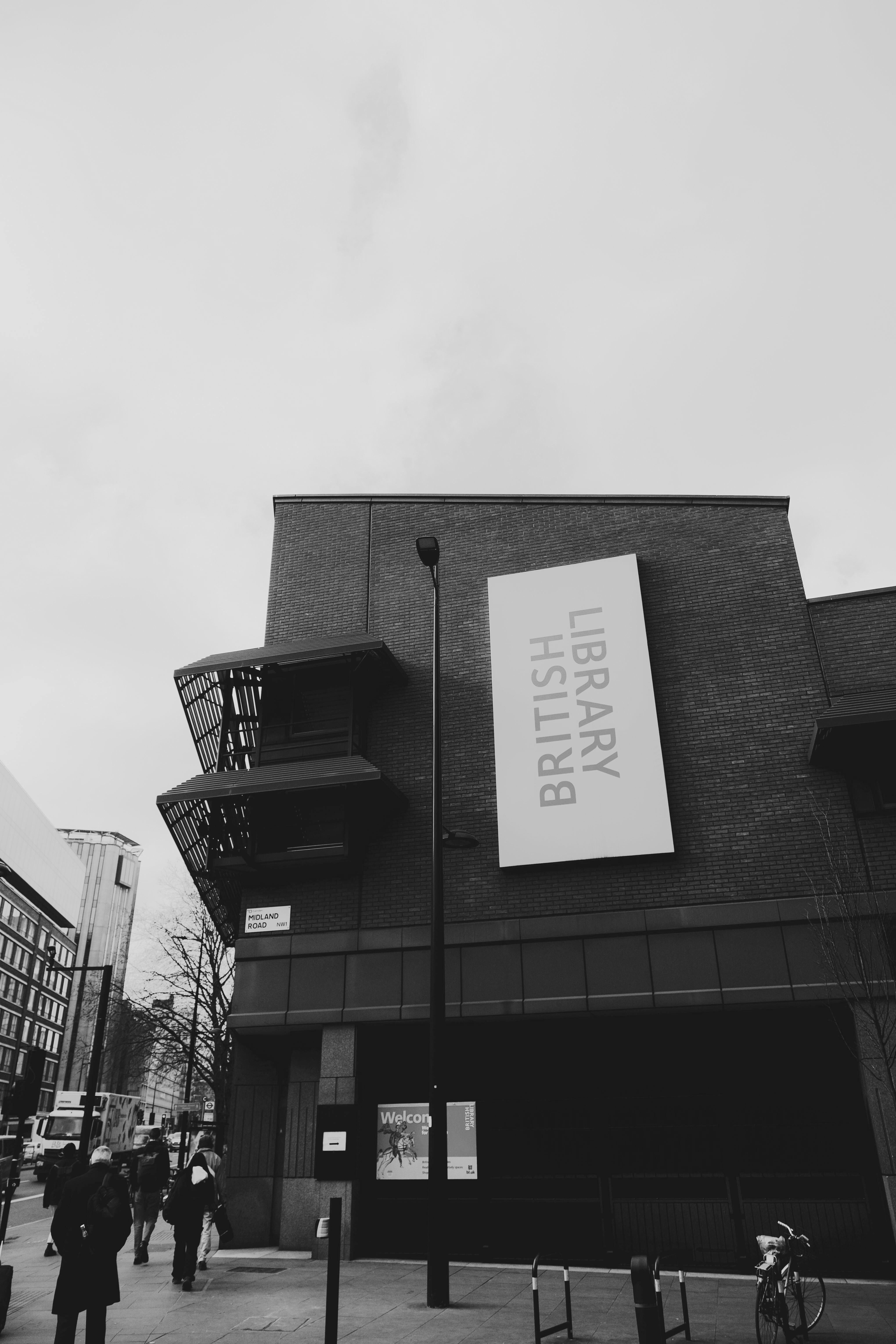
A practical guide to accessing one of the world’s great research collections after its cyberattack
The British Library remains one of the most important research institutions on earth—but recent disruptions have changed how scholars and visitors must navigate its collections.
The British Library, the national library of the United Kingdom, is among the world’s largest research libraries. Its collections contain more than 170 million items in over 400 languages, including more than 40 million books as well as manuscripts, maps, music scores, newspapers, patents, databases, philatelic materials, prints, drawings, and sound recordings. Each year, the Library attracts roughly six million online catalogue searches and more than 400,000 visits to its twelve reading rooms.
In 2023, a major cyberattack caused serious damage to the British Library’s digital infrastructure. As a result, many services that were once routine—especially online access and remote registration—have changed. Although the Library’s catalogue returned online in December 2025, digital access to many materials remains limited.
The best practice today is to confirm that the Library holds what you need and then plan an in-person visit. For many years, researchers could apply for a Reader Pass online. That is no longer the case.
Getting a Reader Pass
After confirming that the Library holds the material you seek, you must apply in person for a Reader Pass (the British Library’s reader card). Due to the cyberattack, applications must now be completed onsite.
To apply, you must arrive with:
A government-issued photo ID
Proof of permanent residence (not necessarily in the UK)
You will also complete a form explaining your research topic and why you need access to specific items. The Library requires you to show genuine need: the materials must not be easily accessible elsewhere.
Be as specific as possible when describing what you need to consult and why.
To understand how the system works, I explored the online catalogue with my own research interests in British theater. I searched for an obscure Jacobite-era comedy titled The Cobler of Preston (1716). Two early manuscript versions and later operettas are available through sources like the Internet Archive.
However, the British Library holds a unique later operetta version from 1798, with new material attributed to playwright Richard Brinsley Sheridan (The Rivals, The School for Scandal). If a digital copy exists, it is not publicly available through Project Gutenberg or the Internet Archive.
To examine Sheridan’s version, I would need to visit the British Library in person, apply for a Reader Pass, and request the item directly.
If the manuscript is housed at St. Pancras, it may be available that afternoon. If it is stored at Boston Spa, it can be delivered within two days—or consulted onsite at Boston Spa.
The Library encourages researchers to exhaust local or alternative resources before requesting items. In an application, you should explain clearly:
What item you need
Why it is necessary
Why it cannot be accessed elsewhere
Because much of the Library’s digitized material remains offline after the cyberattack, many items listed in the catalogue can only be consulted in person.
Anyone aged 18 or older may apply for a Reader Pass. Those under 18 are encouraged to use local libraries.
Typical researchers include:
Academic scholars
Undergraduate and postgraduate students
Genealogists
Members of the general public with serious research needs
If the items you request are stored at the location you are visiting—and you submit your request before 2 p.m.—they may be delivered the same day.
If the item is stored offsite at Boston Spa, requests should be made up to two days in advance for consultation at St. Pancras.
Reading rooms are highly controlled environments. Personal items are generally not permitted inside. Pencils are the only approved writing instruments. Cloakrooms and lockers are available for storage.
The British Library prohibits:
“Prohibited Items are items which could damage the Content or are otherwise inconsistent with the conducive use of Reader Services…including without limit pens, sticky notes, adhesive tape, food, drink, liquids, chewing gum, scissors, knives, blades, portable scanners, adhesives.”
Only Reader Pass holders may enter reading rooms, and assistants accompanying researchers must also apply for their own Reader Pass unless special permission is granted in advance.
The St. Pancras location contains 11 reading rooms, organized by subject:
Business and IP Centre
Rare Books & Music
Social Sciences
Humanities (including history of science and technology)
Humanities (librarianship, information science, recorded sound)
Manuscripts (Western-language manuscripts, private papers)
Newsroom
Medicine & Life Sciences
Physical Sciences & Engineering
Asian & African Studies
Maps
Boston Spa is primarily a storage and retrieval facility, but it includes one reading room.
If you know in advance that your materials are stored there, you may apply for a Reader Pass onsite and conduct your research directly at Boston Spa.
Security checks apply at both entrances and exits, and bags are inspected.
Both locations are fully accessible. Guide dogs are welcome, and induction loops are available at Reception.
St. Pancras offers adjustable tables, lowered desks, alternative keyboards, and specialist equipment for visually or hearing-impaired readers. Both sites provide Blue Badge parking.
Knowledge Held Hostage:
https://crl.acrl.org/index.php/crl/article/view/26408/34343#:~:text=The%20British%20Library%2C%20a%20crown,materials%20(Spanoudi%2C%202023).
Research Start Page:
Research resources, services and help - The British Library
Catalogue Search:
Reading Rooms
Free study spaces and Reading Rooms - British Library
Parliament & the British Library
https://publications.parliament.uk/pa/cm201213/cmselect/cmsctech/322/322vw27.htm#:~:text=The%20British%20Library%20is%20passionate,people%20visit%20the%20Reading%20rooms.
Customer Services / Feedback:
customer@bl.uk (General enquiries & feedback) (bl.uk)
Service-specific / team emails:
Box Office: boxoffice@bl.uk (bl.uk)
Membership: members@bl.uk (bl.uk)
Supporters / Donations: supporters@bl.uk (British Library Support)
International enquiries: international@bl.uk (bl.uk)
Endangered Archives Programme: endangeredarchives@bl.uk (British Library EAP)
(Some specialist areas like reader services also have email contacts listed on procurement or archive documents but aren’t always centralized on the main site.) (Royal Philatelic Society London)
Leadership: Executive Contacts, Chief Executive, Director
The British Library’s Chief Executive role has seen recent leadership changes:
• Rebecca Lawrence was appointed Chief Executive in January 2025. (bl.uk)
She stepped down from this role in November 2025; Dr Jeremy Silver (Board member) is serving as Interim Chief Executive. (bl.uk)
Direct public email addresses for senior executives are not publicly published by the Library on its official contact pages. Leadership-level contact is usually handled through general press/media or formal enquiry channels.
How to contact executive/administrative staff
For executive-level communication, the best avenues are:
• Press / media enquiries: press@bl.uk (for statements or interviews)
• General corporate enquiries: customer@bl.uk (then routed internally)
Board-level correspondence: Official postal address or via British Library board secretariat (often handled via general email)
Phone: 01937 546 060
Email: customer@bl.uk
Jeremy Silver is the British Library’s current Chief Executive Officer.
©Newsjunkie 2026