
Who's behind the news?
Who's behind the news?
Independent initiative to publish the canceled National Nature Assessment
The California Academy of Sciences is a natural history museum, research institution, aquarium, and planetarium in San Francisco's Golden Gate Park.
The San Diego Natural History Museum, known locally as The Nat, is a natural history museum and research institution in Balboa Park in San Diego, California.
iNaturalist is a nonprofit citizen science platform and social network that enables anyone, anywhere, to record observations of wild organisms — plants, animals, fungi, and other life — and share them with a global community of naturalists and scientists.
Silver Spring, Maryland, USA
The Association of Zoos and Aquariums (AZA) is an American nonprofit organization that accredits zoos and aquariums around the world, sets professional standards for animal care and conservation, and coordinates the collective scientific and conservation work of its member institutions.
San Diego Zoo Wildlife Alliance (SDZWA) is a conservation organization that operates the San Diego Zoo and the Zoo Safari Park.
The Huntington is a collections-based research and educational institution in San Marino, California, that combines a major research library, an art museum, and approximately 120 acres of botanical gardens.
Hope for environmental science persists at California bridge institutions
What do you do when your government abandons you?
That’s the question Dr. Phillip Levin was facing when his work, and the past two years of his life, were decimated by a single phone call from an agent of the Trump administration.
Until that call, Levin had been a project director at the White House Office of Science and Technology, leading a Biden-commissioned report on the state of nature in the US. The previous president thought the project was a worthwhile investment because America’s natural resources, like old-growth forests, are “critical to the health, prosperity, and resilience of our communities,” and Levin agreed. A marine biologist who credited the comforting vastness of the Pacific Ocean with helping him process his father’s passing, he didn’t need to be convinced that nature played a valuable role in human life. He got to work on the project, and by January 2025, had a near-complete assessment of America’s ecosystems and their role in the nation’s culture, economy, health, and security. It featured the efforts of about 200 scientists, and was the first report of its kind.
And then, the phone call.
Levin was told to stop all work on the National Nature Assessment. He didn’t think Trump’s White House officials knew what they were canceling, per se. It was just that his work work happened to be on the other side of MAGA’s political battle lines. He was now the enemy, and his team’s report was just one casualty of thousands.
So, what do you do?
First, Levin went independent. The assessment would be finished. It would be published. But it would be without the government’s support. Which left a problem: reach. How could an independent report, published by five-person team, foster anywhere near the same impact as an official White House release?
Ultimately, Levin and the Nature Record, his team’s new independent nonprofit, tried a few things. They got in contact with state governments. They enlisted poets and school-age artists to add some humanities flair to the assessment. And they reached out to local communities through their bridge institutions.
According to environmental journalist and author Mary Ellen Hannibal, the California Academy of Sciences was established in 1853 by seven of San Francisco’s ‘gentlemen scholars,’ including an attorney, a real estate broker, and a pharmacist. These professionals were enthusiastic about botany, and the power of science to “spread the blessings of our ‘free institutions’ to the ends of the earth,” but they were not what we would call qualified environmental scientists today. Hannibal uses the fate of one of the Academy’s first specimens to demonstrate the founders’ amateurism—the gentlescholars received a live owl as a donation during a meeting, which was declared “lost” by the next meeting.
Of course, the term “scientist” was only 20 years old by the time the Academy was founded. And the systems of accreditation, degrees, and peer-reviewed publication that we have now were still being developed. So as much as East Coast and European gatekeepers of scientific recognition resented it, there really wasn’t much of a gap between the work Cal Academy was doing, and the work of other gentlemen scholars of the time, like Charles Darwin.
Modern environmental science owes quite a bit to Cal Academy. Its members and collaborators were involved in major developments in the field, like the first comprehensive Flora of North America, the California Geological Survey, and even Darwin’s On the Origin of Species (editorial support). But what set the Academy apart from the other major players in the scene was its relationship to San Francisco—to the regular, non-scholarly and non-gentle, people of the city. While the academic elite at Oxford and Harvard turned up their noses, Cal Academy welcomed 80,000 visitors to their woolly mammoth exhibit in 1874.
When I say “bridge institution,” I’m talking about organizations that play this role of ambassador between experts and non-experts. Botanical gardens, zoos, planetariums, libraries, and museums of all types can be bridge institutions—anything that maintains a relationship with academia, a relationship to the public, and creates a space for those two spheres to interact. In the environmental science world, bridge institutions turn the latest discoveries into accessible experiences for regular people, keeping the field true to its amateur roots. These places have been a part of scientific development in the US from the beginning. And now, they’re sheltering it against attack from the Trump administration.
In the spring of 2026, Dr. Levin and the Nature Record took their report on the road in a six-stop tour, four of which were bridge institutions. Their stated goal was to collect comments on a draft of the assessment before its final publication in the fall. But they stressed that the comments didn’t have to be from their academic peers. The Nature Record wanted to reach regular people, to have an impact on individual communities. So they chose to visit places like North Dakota’s Gateway to Science and the San Diego Natural History Museum (the Nat).
“For the assessment to reach its greatest and highest purpose, it must reflect your community. You must be able to see yourself in this assessment,” said Nature Record deputy director, Dr. Tessa Francis, during their Nat Talk.
The problem of local relevance plagues government science, even its most respected and well-funded projects. When a voter base doesn’t understand your work, when they can’t see it having a positive impact in their town, it becomes much easier to ignore or turn against. Bridge institutions understand this concept, so they foster research programs that are of, and for, their local environments. This is how places like Cal Academy drove innovation in the past, and how they continue to do it today.
There are currently over 11,500 samples of living genetic material from over 1,300 animal types preserved in the Frozen Zoo at the San Diego Safari Park—the result of 50 years of collection and study. The cyropreserved (frozen at -320°F) archive of gametes, embryos, and eggs was established in 1975, as the first biobank of its kind. Dr. Kurt Benirschk, the founder of the conservation research program at the San Diego Zoo Wildlife Alliance (which operates the city’s zoo and the Safari Park), hoped the Frozen Zoo would someday help save species from extinction. But the cloning technology that would make this possible didn’t exist yet. It does now. And in 2025, a ferret cloned from a Frozen Zoo sample mothered (and grandmothered) three litters of kits, giving lost genetic diversity a thorough re-introduction to the black-footed ferret population.
Building on its legacy of amateur collection, the California Academy of Sciences now co-hosts the iNaturalist platform, and it enlists everyday Californians from up and down the coast to photograph and identify marine life in a yearly summer event called Snapshot Cal Coast. The biodiversity data captured by these community scientists informs the Dynamic Observatory of Biodiversity, an early-warning and forecasting system for population changes in species like sea stars. iNaturalist itself hosts the largest and “most important” biodiversity dataset in the world, according to Cal Academy's director of Biodiversity and Community Science, Dr. Rebecca Johnson.
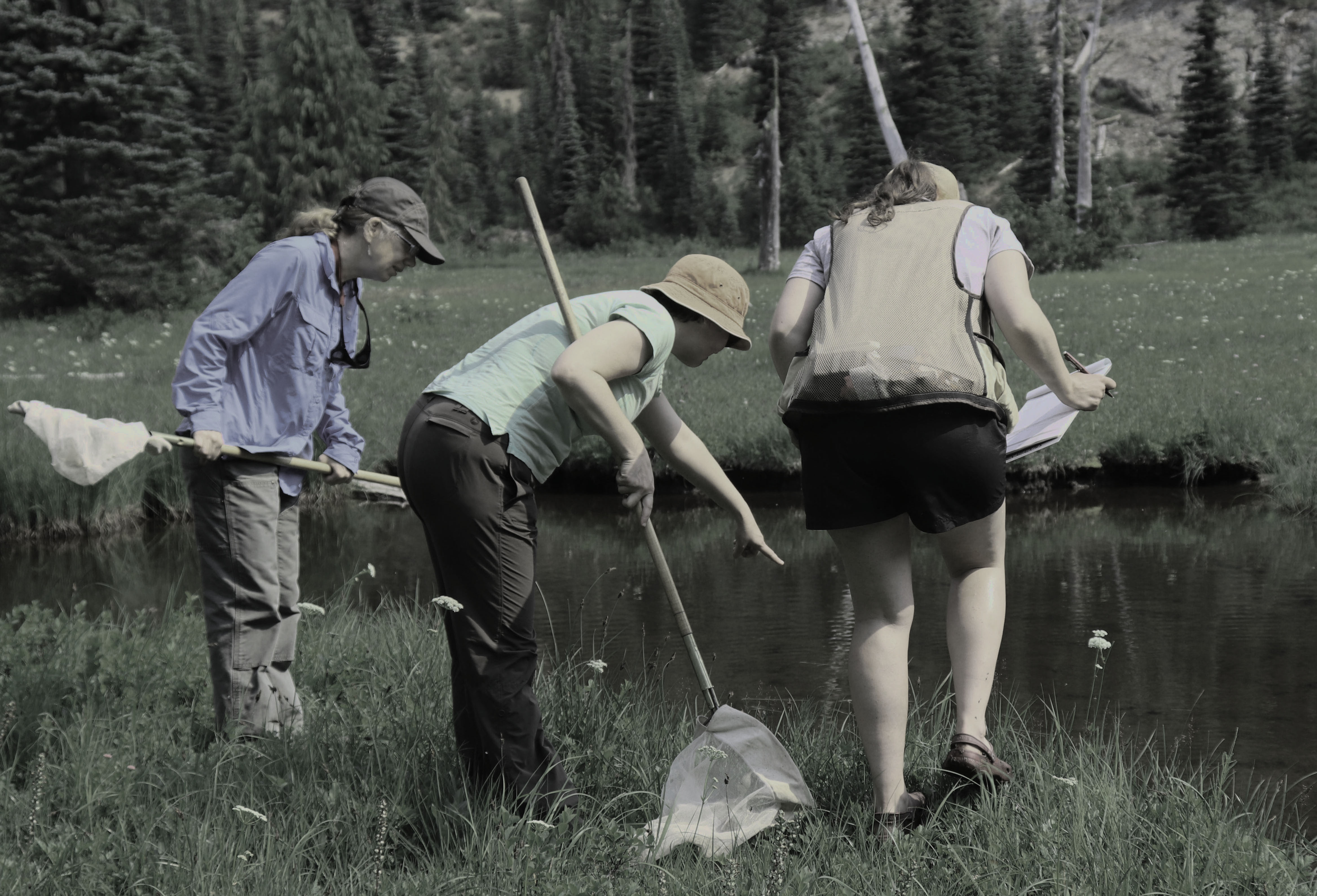
The San Diego Natural History Museum, one of the stops on Levin’s post-government nature assessment tour, used community scientists to test a student thesis on collecting biodiversity data—can environmental DNA (eDNA) be collected by harvesting spiderwebs? The museum’s Director of Conservation Biology, Dr. Michelle Thompson, said they’re still analyzing the data (and it’s mostly bugs), but it looks like eDNA from feathers and fur that becomes trapped in the webs found in San Diegians’ backyards can be used to identify the region’s birds and mammals. The Nat is using this eDNA to build a “reference library of genetic data,” which doesn’t exist yet for the region. The hope is that the research will inform conservation efforts for wildlife in San Diego’s canyons, and in other “islands” of biodiversity in urbanized zones around the world.
In collaboration with the San Diego Zoo Wildlife Alliance and the International Union for Conservation of Nature, The Huntington Botanic Gardens is working to train conservationists in plant cryopreservation. The Huntington also runs a systematics research lab, which invites students from the nearby Pasadena City College, along with volunteers, to participate in the study of cycad plant species, 65% of which are under threat of extinction.
All of these research programs have made significant contributions to their fields. And all of these contributions are, in one way or another, accessible to the public. Antonia, the ferret clone, now lives at the Smithsonian Zoo in DC, where visitors can get a free pass to visit the black-footed ferret exhibit in the Small Mammal House. And the projects from The Huntington, the Nat, and Cal Academy all encourage visitors to participate in the research process themselves. This public-centric approach gives bridge institution science a measure of freedom of freedom they might not have under federal funding.
Dan Ashe, the CEO of the Association of Zoos and Aquariums (AZA), said that none of the 254 zoos in AZA’s membership have had their research programs impacted by Trump-era policies. “I can't tell you that I've seen any visible impact on science in our community, and that probably reflects the business model.”
The zoo business model generally relies on sales (as in tickets, food, and merchandise) to fund its operations and research. The San Diego Zoo, for example, generated 75% of its revenue from admission, membership, and other sales in 2025. Museums, since they qualify for Institute of Museum and Library Services (IMLS) grants, are a bit more vulnerable to the Trump administration. The current president has tried to eliminate the IMLS every year of both of his terms, and he came close to canceling dozens of grants this year, before they were reinstated by court order. Trump proposed a $6 million IMLS budget for 2027, $331 million short of the agency’s spending during 2025.
The Cal Academy and San Diego Natural History Museum programs address this fiscal precarity by enlisting the public—crowdsourcing data instead of spending extra time and funds on professional expeditions. It’s a truth universally acknowledged: volunteers are cheaper than pros.
Museums, and nonprofits in general, have a history of exploiting the goodwill of volunteers and underpaid employees. And Cal Academy, specifically, was recently investigated by the San Francisco Standard after a museum workers’ union accused the museum of misappropriating funds, slashing jobs, and abandoning beloved exhibits in favor of flashy international research initiatives. But, when they’re done responsibly, community science programs add value to public life. In fact, they have the power to address issues beyond the science itself.
“I see people's faces light up when they get to participate, specifically for urban biodiversity [research]. This is the nature that's outside of people's houses. They should feel like they can interact with it if they want to, and know how to interact with it. What we find is, people don't,” said Dr. Thompson.
She explained that participants in the Nat’s Healthy Canyons Initiative—far from trampling over species carelessly, or in over-eagerness—are usually nervous to get up close and personal with nature. They ask anxious questions about trail safety, if they’re going to be scratched up or stranded in the middle of nowhere, or how to even start.
“All across the board, it's just that people don't have the information to interact with these spaces, and therefore, feel uncomfortable to do so,” Thompson said. “When they come out with us, it opens up a door. Like, ‘Oh, I can do this.’"
If you’ve had problems with spending too much time on a screen, or inside your head, you’ve probably heard the internet’s favorite piece of anti-internet advice: “Go touch grass.” Maybe even from the American Psychological Association, which links time in nature to reduced prevalence of mental illness. But with more people living in urban centers, and working 9-to-5 on computers in air-conditioned offices (or from home), forming a true connection with nature can start to feel completely out of reach. Community science programs are making that connection less intimidating by providing expert guidance, and safety in numbers.
The connection to nature doesn’t just benefit community members. Dr. Johnson points out that amateur researchers’ passion can help fuel more discoveries. She gave the example of someone who takes a picture of a butterfly for iNaturalist while looking for their car in a parking lot, who then starts looking for that type of butterfly—that small moment of beauty—in other places. “Then you're paying attention to nature, to timing, to phenology, when you might see butterflies, where you might see butterflies. That's connecting and understanding nature just from one experience. And the millions of people doing that same thing are contributing to this dataset that's helping us answer questions about biodiversity—how it's changing, and things that you couldn't even imagine.”
This engagement-driven approach to science can give biologists more data, and better data to work with. Johnson said she’d seen this process in action with mountain goats.
“Someone's like, ‘Oh my gosh! This is so cool, I just saw this mountain goat!’ And researchers are like, ‘Oh my gosh! We can use the pictures to understand changing molting patterns [due to] climate change,’ because you can see the molt in the picture, and then you can look at all those observations through time, and see how molting timing is changing.”
This feedback loop of engagement is what bridge institutions do best. They invite people into the scientific process and get them excited, which gets scientists excited, which creates more opportunities for the public to engage. This technique also addresses government sciences’ biggest vulnerability at its root cause—it keeps the public from becoming resentful by including them from the very first steps.
The key is to make sure the community members feel like a valued part of the process. Johnson said that properly crediting iNaturalist contributors in scientific publications is an important part of recognizing their efforts. Thompson and the Nat give back by sending community scientists personalized summaries of their research contributions.
“In the end, we are beholden to the public,” said Johnson. “So if we work closely with the public, and continue to tell stories, bring people in, create spaces where people feel included, and that their expertise and their experiences are valued, we will continue to be spaces where we can do good science, and hopefully do it together with people.”
All of the organizations I’ve mentioned here are in California, and have a long history of scientific contributions. But there’s an aspect to bridge institution research that makes it relevant to every state and city that cares about its local natural resources—it can be replicated.
Dr. Thompson credits the San Diego Natural History Museum’s partnerships with its success in community science research. The idea for testing spiderwebs as eDNA collectors came from exchanging ideas with universities and museums in Los Angeles. And the Nat’s relationship with community organizations like Groundwork San Diego Chollas Creek, who have already established trust with the locals, helps with recruiting volunteer collectors.
“That collaboration, I think, has been really important,” said Thompson. “So maybe groups of organizations replicating the collaboration between science institutions and community institutions would be the most successful.”
The Nat documented the founding of its Healthy Canyons Initiative, and created a guide for communities interested in studying their own urban green spaces.
Cal Academy works with California state parks, universities, nonprofits, tribes, marine labs, along with community groups to fuel its research programs. Rebecca Johnson said that involving local stakeholders even more, letting the community’s needs and questions lead the research, instead of the Academy, is a current goal of the program.
“There is a whole other world where, when communities have a problem, they work toward developing the science—and they possibly partner with [professional] scientists—to answer their questions,” she said.
Bridge institutions have been innovators of scientific research before. They kept innovating while the achievements of government science grew to overshadow their own. They’ve made plans, and programs, and Frozen Zoos even when it was unclear if anything would come of their investments. And they can be at the forefront of a new, participatory model of environmental research now.
During the Nature Record’s Nat Talk at the San Diego History Museum, Phillip Levin didn’t mention the Trump administration. He didn’t talk about the National Nature Assessment being canceled, and the tragic loss of the federal research infrastructure. Instead, he talked about the opportunity scientists, and regular folks everywhere, had in front of them.
“Join us,” he said. “Not in the Federal Hall where this project started—not how I imagined things 479 days ago—but in communities, in classrooms and tribal councils, and state agencies, and board rooms, and in living rooms, and in rooms across the country just like this one. Our work continues, and you are invited to join us.”
NYT. Trump Tried to Derail Our Work. We Banded Together and Moved Forward
UC Santa Barbara. The American Presidency Project, Executive Order 14072
Federal Register. Framing the National Nature Assessment
San Diego Natural History Museum. Nat Talk: “For the Record: A Community Conversation about Nature in the U.S.” May 14, 2026.
FoundSF. Excerpt from Citizen Scientist: Searching for Heroes and Hope in an Age of Extinction (2016), by Mary Ellen Hannibal.
Science Museum. Three centuries of citizen science
Pacific Horticulture. Flora of North America
Cal Academy. Our History
San Diego Zoo Wildlife Alliance. Frozen Zoo
TheScientist. Conservation Biologist and Placenta Expert Kurt Benirschke Dies
Forbes. A Biologist Explains The ‘Frozen Zoo’ — The 50-Year Project That Could Rewrite Extinction
Smithsonian Conservation Biology Institute. New Kits Born in Black-footed Ferret Cloning Research
Newsjunkie. Rebecca Johnson, interviewed by Morgan Kriesel, July 27, 2026.
Newsjunkie. Michelle Thompson, interviewed by Morgan Kriesel, July 20, 2026.
IUCN. CSS Biodiversity Banking - San Diego Zoo Wildlife Alliance
The Huntington. Systematics research lab
Newsjunkie. Dan Ashe, interviewed by Morgan Kriesel, June 24, 2026.
San Diego Zoo Wildlife Alliance. 2025 Annual Report, Financials (page 100)
USAFacts. What does the Institute of Museum and Library Services (IMLS) do?
American Alliance of Museums. Right-Sizing the World
The San Francisco Standard. Skeletons in the closet: Inside the unraveling of the California Academy of Sciences
American Psychological Association. Nurtured by nature
San Diego Natural History Museum. Resources
© 2026 Newsjunkie.net