
Who's behind the news?
Who's behind the news?
Read by the author
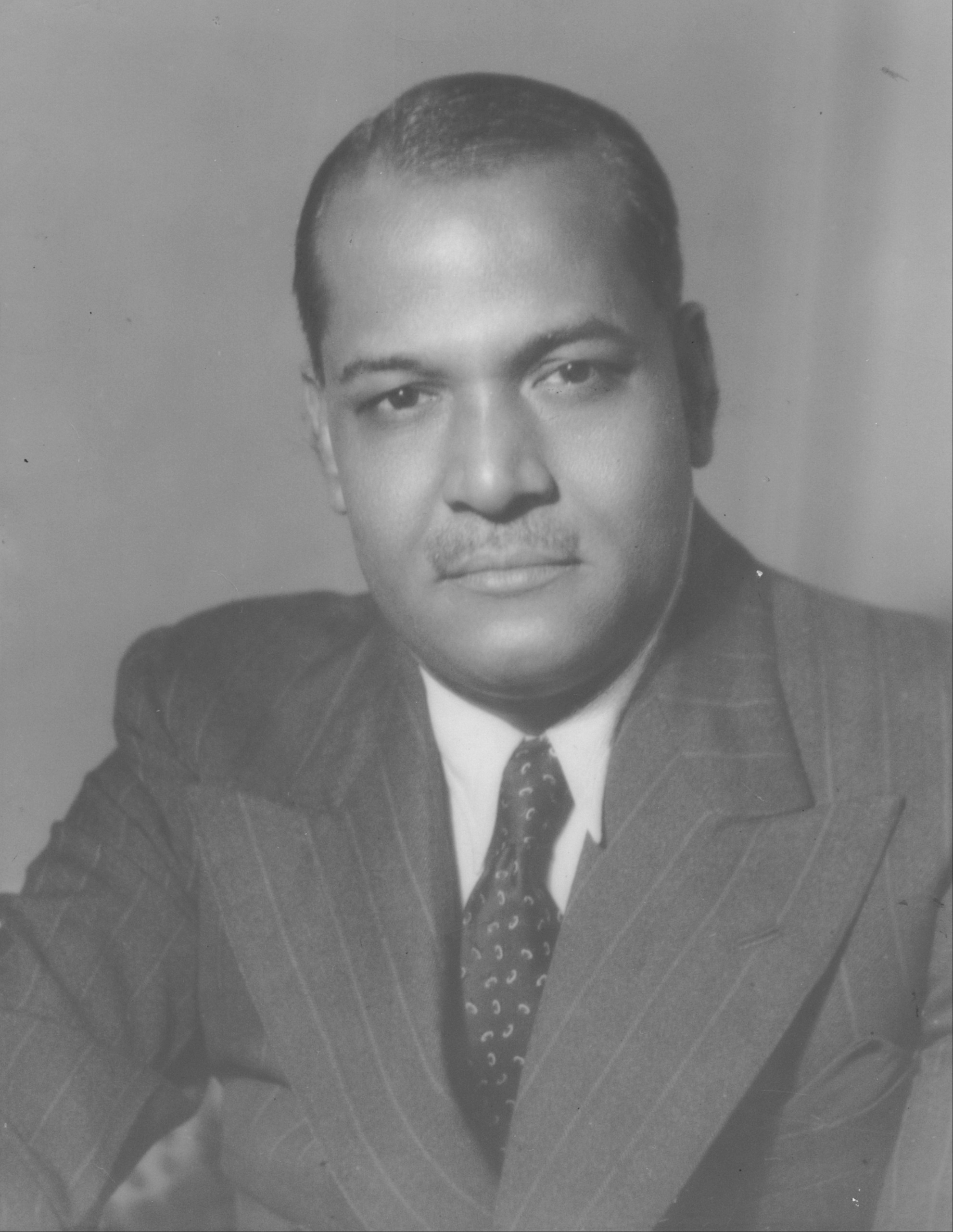
Bold and clever Ramnath Goenka risked much to defy censorship and defend press freedom
Ramnath Goenka arrived in Madras from the northern state of Bihar in 1922. With limited education but tremendous drive, he established himself in the import/export trade. In 1934 he bought shares in The Indian Express, a struggling English-language newspaper. The decision proved momentous for both Goenka and a rising India struggling toward independence.
By 1936, Goenka had gained control of The Indian Express and stabilized it as a going concern. He was 32 years old. Over the following decades he built a formidable journalism operation closely aligned with the movement for Indian independence. His fortitude and integrity of purpose were frequently challenged. Two episodes stand out.
In August 1942 authorities of the British Raj arrested Mahatma Gandhi, Jawaharlal Nehru, and other leaders of the Indian National Congress, mere hours after Gandhi announced the launch of the Quit India campaign. Harsh press censorship rules were imposed to quell the widespread public outrage. Newspapers were restricted from reporting on Congress leaders, the independence movement, or even widely known public events. They were instructed to submit all reporting to government-appointed press advisors for approval.
Ramnath Goenka's response was a protest editorial, “Heart strings and Purse strings,” where he said publishing a journal that looked like a newspaper but could not carry real news would be a "fraud on the public."
Rather than submit, Goenka shut down The Indian Express. It remained closed for four-and-a-half months. In January 1943, with Gandhi and Nehru still imprisoned and Raj censorship in place, Goenka returned the Express to circulation because he felt the public needed news beyond stock British propaganda. Through euphemism, implication, and careful phrasing, he managed to keep The Indian Express publishing through the remainder of British rule and beyond.
Gandhi was released in May 1944. Nehru was released in June 1945, held for 34 months without trial. India and Pakistan achieved independence from Britain in 1947. More than a quarter-century later, Goenka would face another challenge to press freedom—this time from an independent Indian government.
After a judge in Uttar Pradesh voided Indira Gandhi's re-election as prime minister on grounds of electoral malfeasance, she invoked Article 352 of the Constitution and declared a national emergency. For the next 21 months martial law prevailed. Journalists and political opponents were jailed, civil liberties suspended, and restrictive censorship descended on the press with force.
News organizations were required to submit reporting for government review before publication. Most complied. Not all.
In June 1975, likely in retaliation for his support of opposition leader Jayaprakash Narayan, Goenka and The Indian Express were among the most harshly penalized by Indira's regime. The government pulled advertising, lodged tax inquiries, and dispatched property inspectors. There were, by one count, 320 cases against Goenka across India. His powerful lawyer, Fali Sam Nariman, pleaded with him: "Ramnathji, enough is enough. We don't know how long this damn thing will go on, why don't you compromise?"
"Compromise, Nariman? We will fight," he said.
On the night of June 25 the power went out on Bahadur Shah Zafar Marg, the Delhi street where newspapers housed their printing operations. Indira made it clear: comply and survive; resist and die.
When the lights came back on, Ramnath Goenka had made his decision. In the first post-Emergency issue of The Indian Express, June 28, 1975, the two-column editorial section was empty. White space. Goenka had found a way to say the most important thing a newspaper can say without printing a word.
The shock of seeing a void where an editorial should have been sent a clear message to the newspaper's five-million readers, and the word-of-mouth grapevine: resist in any way you can.
Today, Narendra Modi and the BJP employ intimidation tactics against the press in ways similar to those instigated by Indira Gandhi. In spite of threats, including business loss and physical danger and death, India’s independent journals continue to report the truth as best they can. On the downside, most broadcast and legacy media today avoid stories that would be construed as critical of the government or big business.
Ramnath Goenka passed away on October 5, 1991.
In 2006 The Express Group, still owned by the Goenka family, launched the Ramnath Goenka Excellence in Journalism awards. Many journalists from organizations featured in the pages of Newsjunkie, including Scroll, The Wire, Newslaundry, Article 14, and The News Minute have earned the coveted Ramnath Goenka award.
The irony that Indira Gandhi was Jawaharlal Nehru's daughter, the leader for whom Goenka had risked his career and personal safety, was not lost on the public. In the coming years fate and irony continued to manifest in the Nehru-Gandhi political dynasty: Indira was assassinated by her Sikh bodyguards in 1984, in retribution for her military intervention in the occupation of the Golden Temple in Amritsar; her son Sanjay, at one time generally expected to succeed her, had already died in a small plane accident in 1980; her older son Rajiv assumed the prime ministership upon his mother's demise but was himself assassinated by a suicide bomber in 1991. Her grandson, Rahul Gandhi, Rajiv’s son and Jawaharlal Nehru’s great-grandson, is the current leader of the Indian National Congress in the Lok Sabha house (of Parliament), the chief opposing force to Prime Minister Modi’s dominant BJP party.
#
© 2026 Newsjunkie.net
Published in Delhi; regional editions in Mumbai, Kolkata, Pune, Chandigarh, Ahmedabad, Lucknow, Chennai, Hyderabad, & Bangalore
Bombay
Scroll.in, or Scroll, co-founded in 2014 by Samir Patel and Naresh Fernandes, is an English-language news website in Mumbai, Maharashtra, India. Scroll.in and its journalists have won Ramnath Goenka Excellence in Journalism Awards, as well as the CPJ International Press Freedom Award. A Hindi-language version of the website is hosted by the Satyagrah website. Scroll is owned by SCSN Pvt. Ltd., in turn owned by Scroll Media Inc.
New Delhi
Delhi
Newslaundry India is a reader supported independent media watchdog website based in Delhi. It is owned by Newslaundry Media Pvt. Ltd. which began a merger with The News Minute of Bangalore in 2025. Newslaundry relies on subscriptions instead of advertising or donations. Newslaundry reports news, critiques the media, and offer satiric commentary. The founders and main officers are Abhinandan Sekhri, Madhu Trehan, and Prashant Sareen.
Bangalore, Karnataka, India
Bengalaru, Karnataka, India
The News Minute (TNM) was founded in 2014 by three journalists: Dhanya Rajendran, Chitra Subramaniam, and Vignesh Vellore. The publication is incorporated as Spunklane Media Private Limited and is headquartered in Bengaluru, with ground reporters posted across all five southern Indian states.