
Who's behind the news?
Who's behind the news?
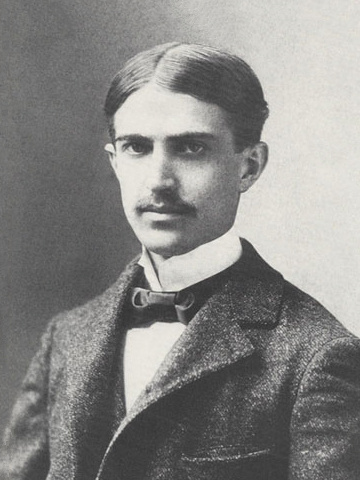
Stephen Crane’s “A newspaper is a collection of half-injustices” still feels uncomfortably modern
Stephen Crane’s short poem “A Newspaper is a Collection of Half-Injustices” was published posthumously in 1900, but it lost none of its power. Readers today will find it’s lost none of its unnervingly accurate description of the modern information ecosystem. Crane’s poem strips journalism down to its most volatile ingredients: spectacle, distortion, crowd judgment, and emotional consumption. Those elements continue to find fertile ground on cable TV, the internet and wherever the public square resides.
The poem unfolds through a series of blunt declarations—“A newspaper is a court,” “A newspaper is a market,” “A newspaper is a game”—each redefining the press as something unstable and morally compromised. Crane does not portray newspapers as engines of enlightenment or democratic virtue. Instead, they become systems where suffering is packaged, outrage is circulated, and truth is shaped as much by public appetite as by fact. Sound familiar?
What makes the poem especially striking is that Crane’s criticism is not aimed solely at journalists. Readers themselves are implicated. Families sit comfortably by the fire while consuming stories of “dire lone agony.” The public becomes both audience and accomplice, emotionally stirred by tragedy but safely distant from it. In Crane’s view, the newspaper does not merely manipulate society—it reflects its appetites back at itself.
The poem’s language is harsh and compressed. Words like “half-injustices,” “squalor,” and “feckless” suggest not outright evil, but a chronic moral instability. Crane presents journalism as an institution that is neither fully truthful nor fully corrupt, but perpetually incomplete and vulnerable to distortion. Error is rewarded. Wisdom is traded away. Public judgment becomes theatrical rather than fair.
That skepticism feels remarkably contemporary. More than a century before debates about misinformation, engagement algorithms, and rage-driven media economies, Crane recognized how information systems can transform complexity into spectacle. His vision anticipates modern anxieties about crowd-driven narratives and institutional distrust, where visibility and emotional reaction often matter more than accuracy.
The final stanza broadens the critique even further. Crane frames the newspaper not simply as a flawed institution, but as an extension of recurring human behavior: “eternal stupidities” roaming through history in new forms. The technologies change, but the impulses remain familiar—fear, vanity, outrage, performance, and the endless attraction of public spectacle.
Among Crane’s lesser-known poems, this one stands out for its clarity and focus. It is not merely cynical about journalism. It is skeptical about the relationship between information and human nature itself. That may be why it still lands so sharply today.
A Newspaper is a collection of half-injustices
By Stephen Crane
A newspaper is a collection of half-injustices
Which, bawled by boys from mile to mile,
Spreads its curious opinion
To a million merciful and sneering men,
While families cuddle the joys of the fireside
When spurred by tale of dire lone agony.
A newspaper is a court
Where every one is kindly and unfairly tried
By a squalor of honest men.
A newspaper is a market
Where wisdom sells its freedom
And melons are crowned by the crowd.
A newspaper is a game
Where his error scores the player victory
While another's skill wins death.
A newspaper is a symbol;
It is feckless life's chronicle,
A collection of loud tales
Concentrating eternal stupidities,
That in remote ages lived unhaltered,
Roaming through a fenceless world.
Stephen Crane, “A newspaper is a collection of half-injustices,” from War Is Kind and Other Lines (1899). Public domain.
Column © 2026 Newsjunkie.net