
Who's behind the news?
Who's behind the news?
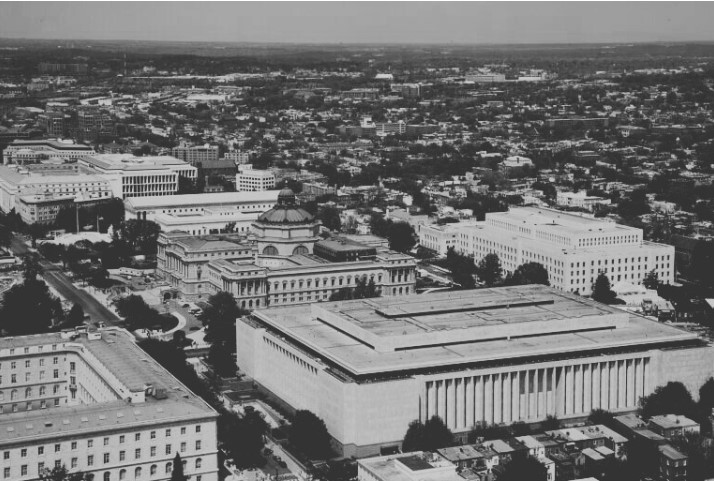
Part II in our Library of Congress series: What to do before you go, if you can’t go and if you do visit the library
In this second installment of our four-part series on the Library of Congress, we cover what you need to know before diving into its vast collections—registration, reading rooms, research strategy, and logistics—so you can make the most of the nation’s primary research library.
Today’s living link between the record of yesterday and the possibilities of tomorrow. The Library of Congress is not just all these marvelous books and buildings. It is the anguish, achievements, and aspirations of our forefathers living on or near the heart of this country.
—James H. Billington, 13th Librarian of Congress
The Library of Congress (LOC) has welcomed the public since 1897, but it does not operate like a neighborhood library. Materials do not circulate. You don’t browse the stacks. Instead, the LOC is a request-and-retrieve research machine—and once you understand that, it becomes one of the most powerful research environments in the country.
The Library of Congress is best thought of as a library of last resort. Staff strongly recommend beginning your research at local or university libraries and turning to the LOC once those avenues are exhausted.
Your first stop should be online. The Library of Congress Catalog contains tens of millions of records across formats and is essential for figuring out what exists, what’s digitized, and what you’ll need to request on site. The Library’s Digital Collections offer a curated sample of holdings—not comprehensive, but invaluable for orientation and preliminary research.
Two tools can save enormous time:
Ask a Librarian: This is the cheat code. LOC specialists can confirm the right reading room, relevant collections, and even search terminology.
Research Guides and Finding Aids: Staff-built guides and archival finding aids often describe collections down to the box or folder level.
A practical tip: once you identify relevant catalog records, use the catalog’s Cite / Save / Email tools to keep call numbers and citations from drifting into chaos.
Researchers who can’t travel may request materials via interlibrary loan (ILL) through their local or university library. The LOC lends to libraries, not individuals, and whether an item circulates depends on both LOC restrictions and the borrowing library’s rules.
Two things are true at once:
The Library uses free timed-entry passes for crowd control.
To use reading rooms, you need a Reader Identification Card.
Reader Cards are available to anyone age 16 or older with a valid government-issued photo ID. You can pre-register online, but you must complete registration in person at a Reader Registration Station.
Timed entry reservations can usually be made up to 30 days in advance for individuals. Groups of 20 or more must reserve earlier. Same-day entry for researchers is possible but limited—advance planning is strongly recommended.
Always check hours shortly before your visit. Reading rooms typically operate 8:30 a.m.–5:00 p.m., but holiday schedules and special closures do occur.
The LOC is not one reading room—it’s a campus of specialized spaces:
Main Reading Room (Jefferson Building): General collections and a common starting point.
Science and Business Reading Room (Adams Building): Technical, scientific, and economic materials.
Specialty Reading Rooms (mostly Madison Building): Manuscripts, newspapers, maps, prints and photographs, performing arts, recorded sound, and moving images.
If you’re unsure where to go, don’t guess. Use Ask a Librarian and explain your topic and what you’ve already found. Some materials—especially those stored off-site—require advance notice, sometimes up to two weeks.
Once registered, you request items through the online catalog using your Reader Card number. Planning around retrieval times is essential:
Same building: 45 minutes to 1 hour
Between buildings: up to 2 hours
Physical directories: 2–3 hours
Off-site storage: 24–48 business hours (no weekend retrieval)
Microfilm/microfiche: ~30 minutes
Mixed media or machine-readable materials: ~24 hours
Translation: batch your requests. Don’t request one item, read it, then request the next—unless you enjoy watching clocks.
Rules vary by room, but expect a serious research environment:
Lockers are common; bags may be restricted.
Pens are prohibited in some rooms; pencils are required.
Only essential items are allowed at desks.
Materials may need to be approved or stamped before use.
Prohibited items include weapons, chemicals, drones, large bags, sealed packages, and anything restricted by the U.S. Capitol Police. Photography is generally allowed with battery-operated devices, but flash is prohibited.
If you’re doing real work, one day is often just a warm-up. Many reading rooms allow materials to be placed on short-term reserve so you can return without starting over—often up to seven business days, depending on format.
Basic copying and scanning in public research areas are often free. Higher-quality reproductions or remote requests are handled through Duplication Services, which are fee-based. Photography rules vary by room and material type.
The LOC is also a dataset library. Researchers working with statistics, digital humanities, or machine learning should explore:
LOC Labs / Data for Exploration
Selected Datasets and Web Archive Datasets
loc.gov APIs
Exploratory data packages with documentation and sample code
Tutorial repositories and notebooks exist to help researchers use these materials without reinventing workflows.
Identify materials in the LOC Catalog and capture call numbers.
Use Ask a Librarian to confirm reading rooms and procedures.
Pre-register for a Reader Card; bring photo ID.
Reserve timed entry and confirm hours.
Batch requests around retrieval times.
Pack light and follow reading room rules.
Approached with preparation and patience, the Library of Congress rewards researchers with depth, scale, and discoveries that rarely exist anywhere else.
Library of Congress (Main Site)
https://www.loc.gov/
Using the Library / Research at the Library of Congress
https://www.loc.gov/research-centers/use-the-library/
Library of Congress Online Catalog
https://catalog.loc.gov/
Digital Collections
https://www.loc.gov/collections/
Ask a Librarian (Research Assistance)
https://ask.loc.gov/
Interlibrary Loan Information
https://www.loc.gov/research-centers/services/interlibrary-loan/
Reader Identification Card (Registration)
https://www.loc.gov/research-centers/use-the-library/research-at-the-library/get-your-library-card/
Timed Entry Reservations
https://www.loc.gov/visit/
Large Group Timed Entry (20+ visitors)
https://www.loc.gov/visit/large-group-reservations/
Visitor Tours & Exhibitions
https://www.loc.gov/visit/tours/
Virtual Tour of the Jefferson Building
https://www.loc.gov/visit/virtual-tour/
Reading Room Hours for Research
https://www.loc.gov/research-centers/use-the-library/research-at-the-library/hours-for-research/
User Policies (Allowed & Prohibited Items)
https://www.loc.gov/research-centers/use-the-library/research-at-the-library/user-policies/
U.S. Capitol Police – Prohibited Items
https://www.uscp.gov/visiting-capitol-hill/regulations-prohibitions/prohibited-items
Duplication Services
https://www.loc.gov/duplicationservices/
Library of Congress Labs / Data for Exploration
https://labs.loc.gov/
LOC APIs and Data Services
https://www.loc.gov/apis/