
Who's behind the news?
Who's behind the news?
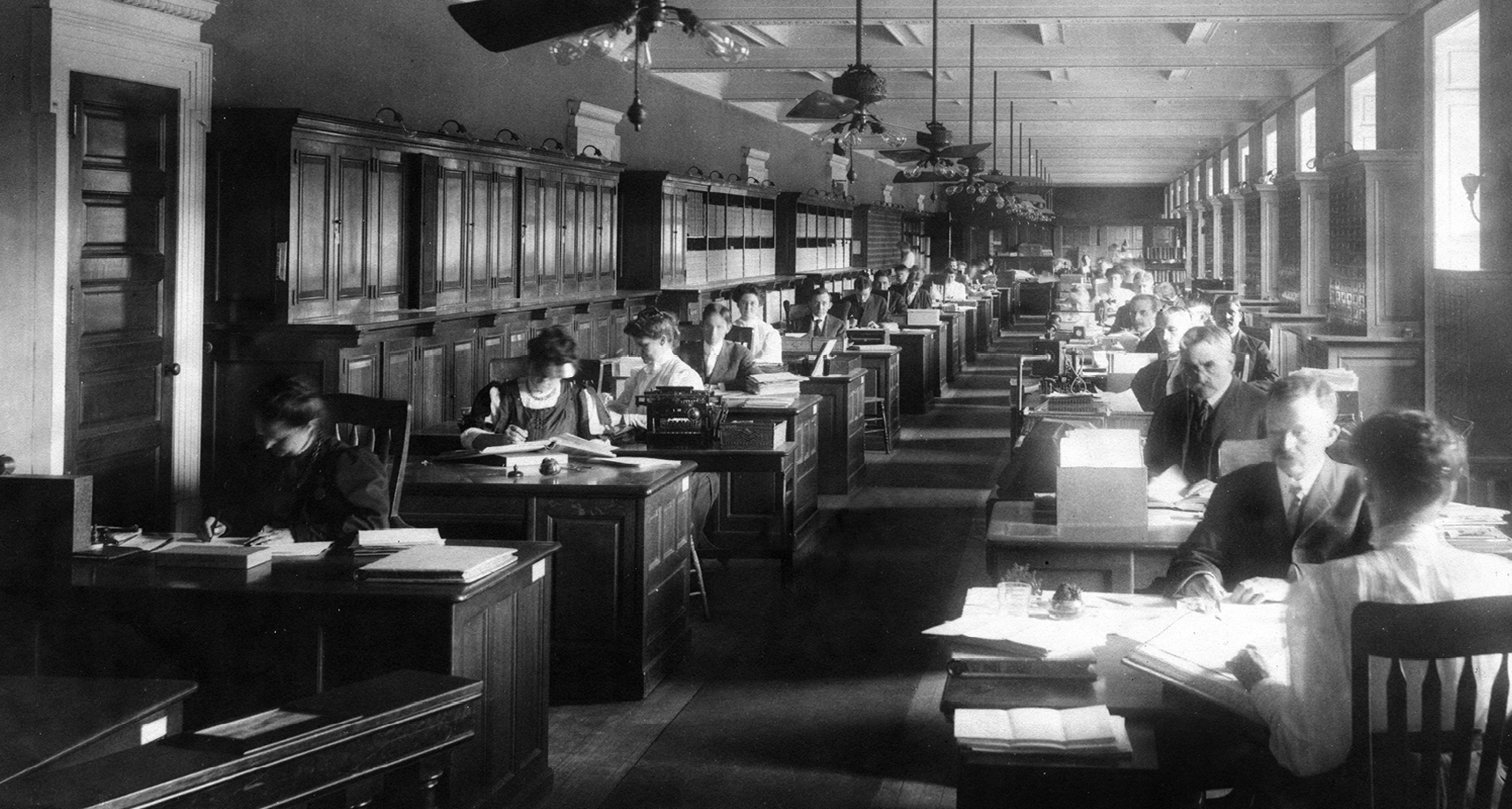
Part III: A short history of the Copyright Office
Before we get into how to use the Copyright Office, it's imperative to understand what is copyright. Copyright protects creative works such as books, drawings, photographs, songs, and movies. A utility patent protects new inventions or processes. Neither copyright nor patent law protects ideas themselves, but copyright may protect the way in which ideas are creatively expressed. Trademark law protects words, phrases, symbols, or designs that identify the source of goods or services and distinguish them from those of others.
When Congress enacted the first federal copyright law in 1790, no centralized system for registering books existed. Authors registered works in district courts in their respective states. They were required to deposit a copy wherever state rules dictated, which might be the Department of the Interior or even the Department of State. Later, deposit requirements shifted to the Smithsonian Institution.
Currently, authors submit two “best copies” of a book to the Copyright Office. These copies may not remain permanently in the Library of Congress. If the work is deemed a significant resource for researchers, it becomes part of the Library’s permanent collection. If not, the Copyright Office retains a physical copy until the copyright expires.
Before Ainsworth Rand Spofford began his term as the sixth Librarian of Congress in 1864, he had long advocated for transforming Congress’s library into a national library. He also championed the idea that the Library of Congress should serve as the central authority for establishing copyright authorship.
During Spofford’s tenure, copyright covered books, pamphlets, maps, prints, photographs, and sheet music. Today, nearly all forms of intellectual property can be copyrighted, including poetry, novels, songs, musical theater, films, architecture, and computer software.
Copyright protects the manner of expression. It does not protect facts, ideas, systems, or methods of operation.
Like other aspects of the Library of Congress, Copyright Office information is searchable. The Copyright Office databases can help answer several important questions:
Public Domain Status: Has a copyright expired? Can the work be used without permission?
Permissions: Identifying the copyright holder to request permission to reproduce, distribute, modify, or incorporate a work into a new publication or creative project.
Clearing Rights for Production: Producers who incorporate third-party material (such as a filmmaker using a popular song) must ensure all content is properly licensed.
Fair Use: Limited use of copyrighted material is allowed for commentary, news reporting, education, or criticism. To assess risk or seek clarification, it may be necessary to identify the copyright holder.
Legal Action: Copyright owners can research ownership chains to determine whether infringement has occurred and to build a legal case.
Any work is automatically copyrighted once it is completed and made available to the public. However, registering a work with the Copyright Office strengthens its legal standing, particularly in disputes over authorship or ownership.
Although the Copyright Office is housed in the James Madison Building, it operates as a separate entity. Research methods are similar to those used elsewhere in the Library of Congress, with one key exception: questions should be directed to the Copyright Office staff rather than to general reference librarians.
All other procedures—obtaining a timed entry, securing a Reader’s Card, and navigating the Library—remain the same. If you do not already have a Reader’s Card, obtain one first (instructions are provided in the “How to Use the Library” section).
Well before your visit, contact the Copyright Office to describe your research needs. Some materials may be stored offsite and require advance notice to be delivered to the Copyright Office Reading Room. Arrange a research date and time with the office, then contact a general librarian to secure your timed entry. Rules regarding personal belongings and reading room conduct follow standard Library of Congress policies.
To register a work, navigate to the Copyright Office’s online portal. The portal includes links for registering a single work as well as group registrations and other categories. Authors may also use these tools to protect works in progress.
Registration fees vary by submission type. Currently:
A single author registering a single literary work (not “work for hire”): $45
Standard applications (co-authored works, works for hire, or complex submissions): $65
Paper filings submitted by mail: $125 (longer processing time)
When submitting online, you must create an account, pay by credit card or bank transfer (routing and account numbers required), and upload a digital copy of the work.
For a single original work with no ownership disputes, processing generally takes one to three months.
Copyright Office Help:
https://www.copyright.gov/help/
Copyright Registration:
https://www.copyright.gov/registration/
Phone Numbers:
1-202-707-3000
1-202-707-5959 (general questions)
1-877-476-0778 (toll-free)
Mailing Address:
U.S. Copyright Office
101 Independence Ave., SE
Washington, DC 20559-6000