
Who's behind the news?
Who's behind the news?
Turns out knowledge isn’t an easy kill after all.
Hello journalists, scientists, lawyers, librarians, writers, archivists, professors, administrators, professionals of the knowledge sector—you are an interesting lot, readers of Newsjunkie!
Gordon Whiting here. I’m glad to connect with you in this moment of deep disruption to the news and research sectors. For three years we have labored to make Newsjunkie a laboratory of the social information environment—news and research, specifically. What we’ve learned is that things aren’t what they seem.
It won’t surprise you to hear that in the information business social changes borne of technology, commerce, and politics are stressing the model. It may surprise you to hear there is real strength in the foundations of news and research. Our surveys of the world’s news organizations, the world’s libraries and archives, higher education, non-profits, and the beat-up-but-newly-energized science and research sector show that people around the world care about the preservation and advancement of knowledge. They are fired-up and mobilizing.
Turns out knowledge isn’t an easy kill after all.
Let me give you some good news: In regional journalism you’ll find excellent reporting from Capital & Main, CalMatters, San Jose Spotlight, and Reveal, to cite four standout California news orgs that make our mornings here at Newsjunkie’s Los Angeles office.
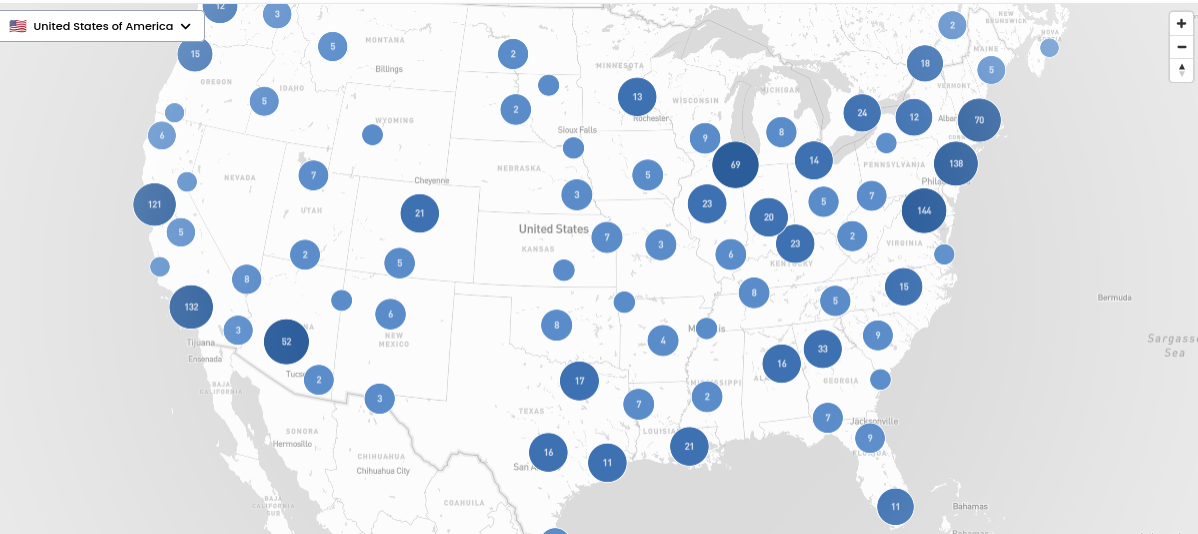
There is also a bounty of incredible independent journalism to be found across North America, Europe, and Asia on the Newsjunkie database. A few to consider: In USA: Chicago Sun-Times, ProPublica, Texas Tribune, Baltimore Banner, 100 Days in Appalachia, NiemanLab, and States Newsroom; India: Scroll.in, The Wire, Article 14, The News Minute, Newslaundry, Splainer, and Himal Southasian; UK: The Observer, The Register, Press Gazette, and Cherwell; all these and more will give you stories that stack up. On the research and archive front, there’s National Security Archive, Data Rescue Project, EDGI, Climate Central, and on and on. This is good stuff, people. Check them out. Share. Subscribe. Donate.
That being said, today our friends at the Internet Archive released a harrowing report: Vanishing Culture. Authors Luca Messarra, Chris Freeland, and Juliya Ziskina lay out the loss of digital history that corporate greed and government indifference are causing by closing down access to books, periodicals, and documents on the internet. Painful to read, but we’re in an era of pain. Get it, read it, do something about it.
We cover a different pain in Prairie Fire, which is about damage done by our own (US) government. But despair is not an option. The scientists, researchers, and activists we’ve spoken to, in interview after interview, are not taking it lying down. The work continues and they need our help. Get involved.
We have built something we are proud of. Newsjunkie is home to more than 4,000 pages of interviews, articles, reviews and commentary on the news and knowledge sectors. Check out this week’s pieces: Peter Landau’s interview with groundbreaking journalist/cartoonist Joe Sacco, my interview with National Security Archive director Tom Blanton, Max Reif’s poem The Difference Between Journalism and Literature, and the column What we’re reading—this week it’s Michael Buckland’s excellent primer on information science, Information and Society (MIT Press).
Also, today we released our version of an internet golden oldie: the RSS feed. You can now subscribe to Newsjunkie articles and blog updates through your email reader or other RSS-friendly app. More news in this zone: we are upgrading our newsletter management so you will soon see choices for subscriptions and bulletins you can get in your mailbox.
A final thought: Knowledge is power. Why do you think they’re trying so hard to break it?
Thank you for reading Newsjunkie.
—Gordon
Science and engineering are constructive enterprises evolving through hypotheses and model building, trial and error, testing and revision. For this reason, shared access to the record of prior work is critical.
—Michael Buckland, Information and Society
© 2026 Newsjunkie.net